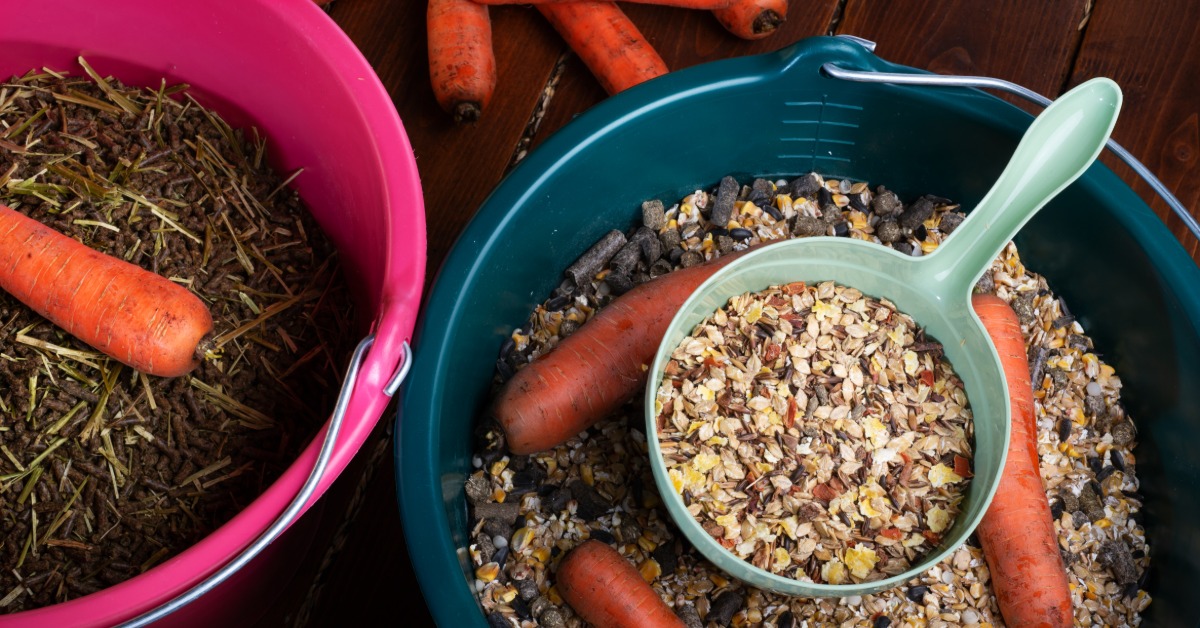
Feeding horses can get surprisingly specific once you start looking at what’s actually in the bucket and what’s out in the field. Is your horse doing great on hay and pasture alone, or do they need a little extra support? When you’re sorting through forage vs. concentrate choices, it helps to know what each one does and where each one fits. A good feeding plan starts with the basics, then adjusts for the horse in front of you.
What’s Forage?
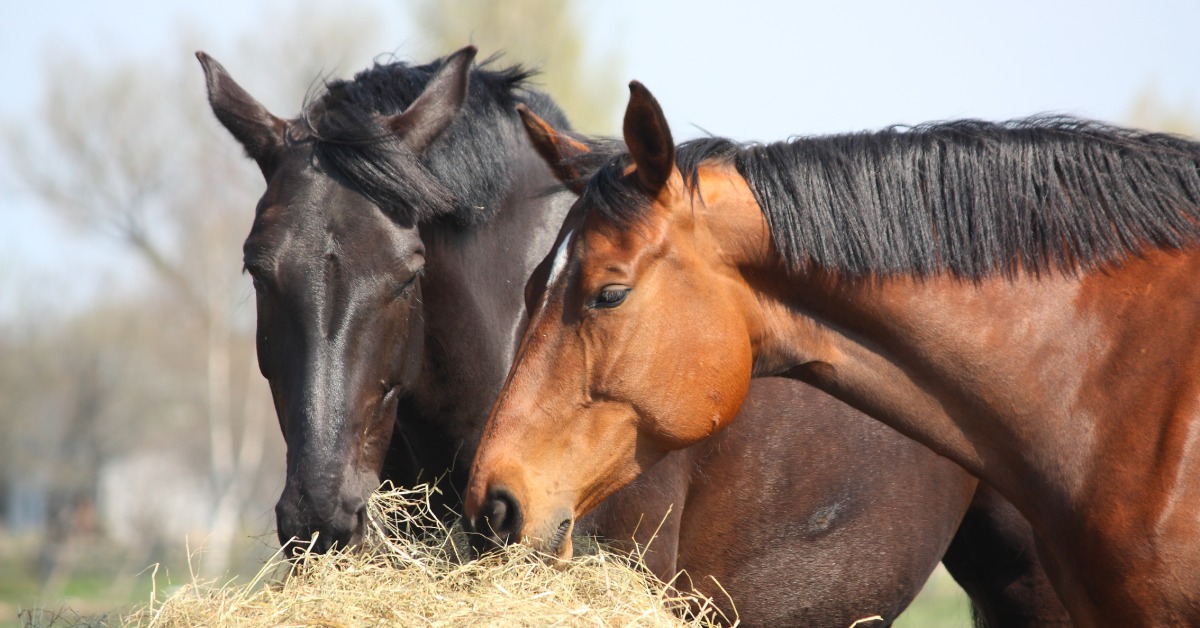
Forage is plant material horses eat as the base of their diet. It includes fresh pasture, hay, and other high-fiber roughage made from grasses or legumes. In plain terms, forage is the bulky, fibrous feed horses are meant to eat in the largest amount each day. It gives them the fiber their digestive system needs and the long-stem material they’re built to chew for hours.
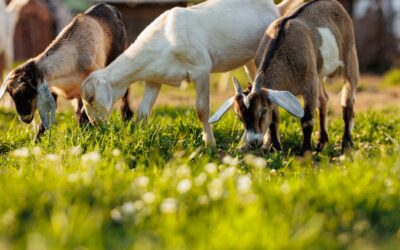
Horses can get forage by grazing in pasture, or owners can provide it in harvested form, like baled hay, chopped forage, cubes, or bagged forage products. The exact form depends on the horse, the season, and what’s available. A horse out on good pasture may get much of its forage by grazing, while a stalled horse relies on its owner to provide forage throughout the day.
What Are Concentrates?
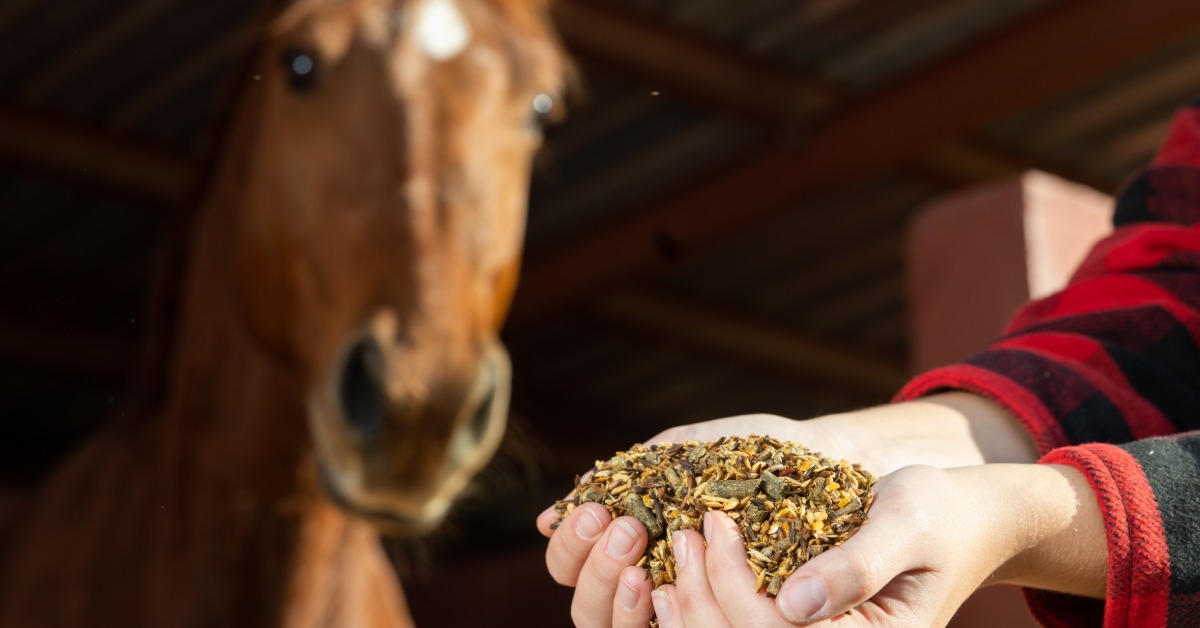
Concentrates are feeds with a higher level of energy or nutrients packed into a smaller amount of feed. They’re commonly made with grains like oats, corn, or barley, though commercial concentrates can also include added protein, fat, vitamins, and minerals. Unlike forage, which is bulky and high in fiber, concentrates are denser and designed to add nutrition without requiring a horse to eat a large volume.
According to Penn State, most horses don’t need concentrates at all if they’re maintaining well on a forage-based diet. Still, some may benefit from concentrates due to age, workload, or condition. For example, a growing horse, a broodmare, or a horse in heavy work may need more calories or nutrients than forage alone can provide. But even for horses that can benefit from them, concentrates should only be fed as a small, supplementary portion of the diet.
How Do You Decide on the Right Balance?
The right balance between forage and concentrates depends on the individual horse in front of you. There isn’t one fixed ratio that works for every horse, because age, activity level, body condition, and health history all affect feeding needs. A horse standing around the pasture all day has a very different diet from one in training, growing, nursing a foal, or struggling to hold weight. Here are a few questions to help you look at your horse’s needs more clearly and figure out an appropriate split.
Is Your Horse Maintaining Weight Well?
If a horse is holding a healthy weight, has good topline, and looks balanced on a forage-based diet, there may be no reason to add much concentrate at all. If weight is dropping, ribs are becoming too visible, or muscle condition is slipping, the diet may need more support.
How Much Energy Is Your Horse Using?
Workload changes feed needs in a real way. A horse in light work may do perfectly well on solid forage and a balanced feeding program, while a horse in regular training or heavy performance work may burn through more calories than forage alone can replace. Energy output has to match energy intake, or weight and performance can slip.
What Stage of Life Is Your Horse In?
Age changes nutrition needs. Growing horses need support for development, broodmares have increased demands during pregnancy and lactation, and senior horses may need extra help maintaining weight or chewing long-stem forage comfortably. A feeding plan has to reflect those changes instead of staying the same year after year.
Is Your Horse Dealing with Any Health Concerns?
Some horses need a more thoughtful balance because of metabolic issues, dental problems, a history of ulcers, or trouble handling certain feeds well. In those cases, the question isn’t just how much the horse eats. The question is what kind of feed the horse can manage comfortably and safely.
Are You Looking at the Whole Diet or Just One Feed?
It’s easy to focus on the grain scoop and forget the rest of the feeding plan. The real balance comes from looking at the full picture, including pasture time, hay quality, forage type, feeding frequency, body condition, and whether the horse is actually thriving on the current routine. One bag of feed doesn’t answer all of those questions by itself.
Doing the Math
After looking at the above aspects of your horse’s health, you should have a better idea of how much support they actually need from concentrates. If your horse is maintaining weight well, doing light work, and thriving on good pasture or hay, they may not need concentrates at all. But if you have reason to believe they could benefit from extra calories or nutrients, you can start figuring out the ratio by weighing your horse and calculating total daily intake.
A horse generally needs 1.5% to 2% of its body weight in feed each day. So, if your horse weighs 1,000 pounds, it would need about 15 to 20 pounds of total feed per day. At least 70% of that should come from forage, which means roughly 10.5 to 14 pounds of forage for a 1,000-pound horse. If forage alone isn’t providing enough nutrition, the remaining 20% to 30% can come from concentrates. For that same 1,000-pound horse, that would be about 3 to 6 pounds of concentrates per day.
Keeping track of your horse’s weight can help you find the right percentage for them within these ranges. If they’re losing weight, up the percentage of forage or concentrates. If they’re gaining too much too rapidly, reduce forage or concentrate consumption or eliminate concentrates entirely.
Shop Lucerne Farms’ Forage
While concentrates are useful for filling in gaps in nutrition, remember that they should never be the majority of your horse’s diet. Most horses need a forage-based meal plan to support digestive health and maintain healthy body condition. At Lucerne Farms, we specialize in growing high-quality, specialty feed for all types of horses, from the easy keeper to the broodmare. Our Hi-Fiber forage is, as its name suggests, a high-fiber option ideal for horses managing conditions like ulcers, insulin resistance, or metabolic concerns. Instead of relying on too many concentrates, let our forage products fill the gaps in your horse’s nutrition.